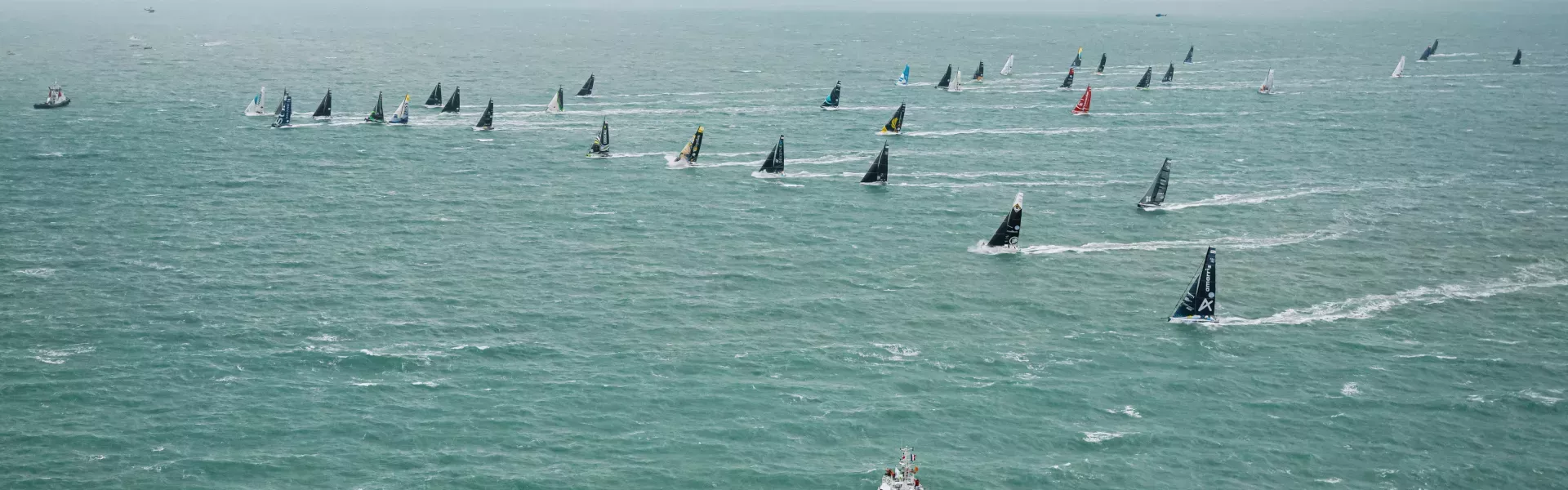
défi Atlantique, Good start from Pointe-à-Pitre, on the way to Horta!
Leave in summer, to arrive in winter.
Everial and the Italians set the tone
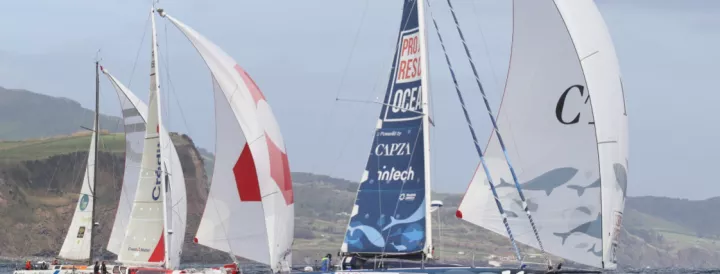
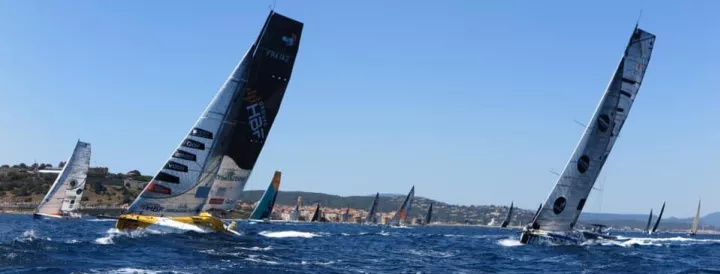
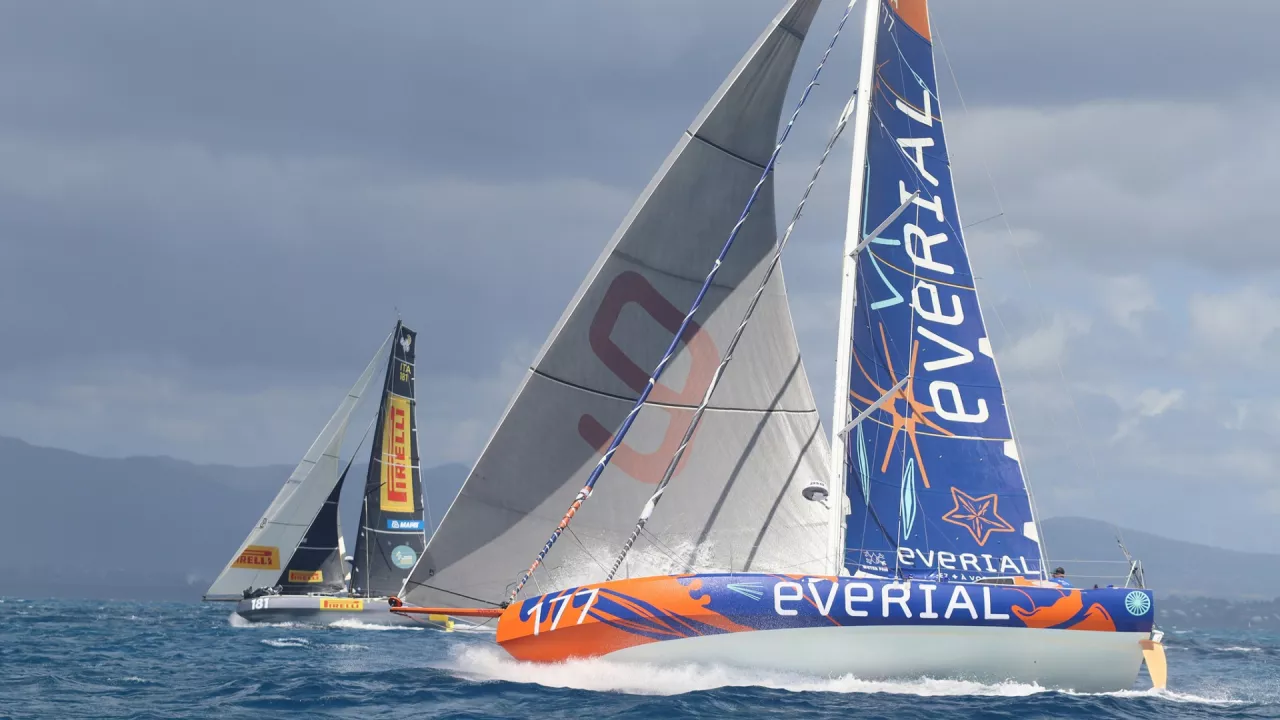
They were expected and the two Italian crews of Alberto Bona (IBSA) and Ambrogio Beccaria (Allagrande- Pirelli) immediately showed themselves to be equal to their ambitions. At more than 17 knots, they took the lead with a dazzling Erwan Le Draoulec (Everial), perfectly launched on the line, under gennaker perfectly adjusted. There was no time for observation and the latest generation of Class 40s were having a field day, despite the choppy conditions.
24 hours under high surveillance
They are 39 sailors, 38 men and one woman, who have been sailing since this morning in Guadeloupe, at 11 am local time, towards Horta, the end of the first stage of the Atlantic Challenge, and whose ultimate destination will be La Rochelle. 39 sailors divided up at the whim of the skippers and double-handed owners for two of them (the Englishmen Brian Thompson and Allister Richardson on Tquila and Marc Lepesqueux and Renaud De Hareng on Curium Life forward), and up to four crew for Dopamine Sailing Team of Raphael Auffret and Everial, the new Verdier design now in the hands of Erwan Le Draoulec, who is taking on board the only woman in the race, Marie-Kell de Cannart. 39 sailors with well-developed race plans, between the necessary aggressiveness at the start to avoid any stalling, and wise caution on a stretch of water already agitated by nearly 1.5 metre waves, and strewn with traps prefigured by the innumerable fishing traps, the drifting buoys of the FCDs (Fish Concentration Devices), and the dreaded sargasso. The first 24 hours will be very closely watched, with the day's passages at the obligatory marks of Basse-Terre and Marie-Galante. The first night at sea will undoubtedly mobilise the attention of all the crews, who will be called upon to try to discern the obstacles on the water while anticipating the numerous squalls expected.
Upwind sailing, and nothing but upwind sailing
The first three or four days of the race will be marked by sailing as close to the wind as possible, in a trade wind that is set to ease off progressively and at the rate of distance gains due North. For the sailors, it will be a race of placement, of searching for the best angles adapted to their hulls, which are now so different within a Class40, which supports many different architectural approaches. A first part of the race where we are not expecting any gaps in a fleet that will soon come up against the high pressure. This will be the start of other manoeuvres to place and choose a route while awaiting the arrival of violent westerly lows.
What is a FAD?
Used mainly for tuna fishing, a Fish Aggregating Device (FAD) is a raft made up of an assembly of floating objects extended underwater by nets or ropes. For thousands of years fishermen have known that any object floating in the oceans attracts fish. This is what happens with the artificial FADs deployed by the industry, which have the effect of concentrating schools of fish around these rafts.