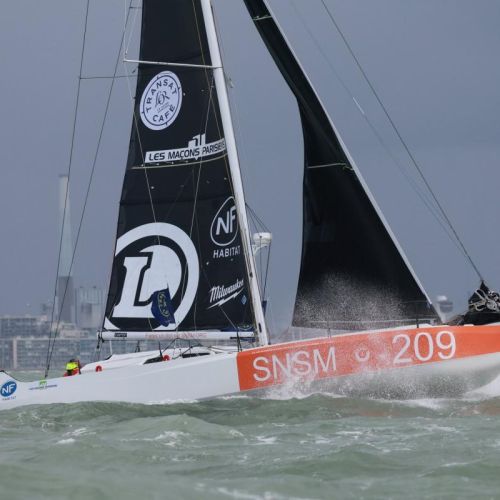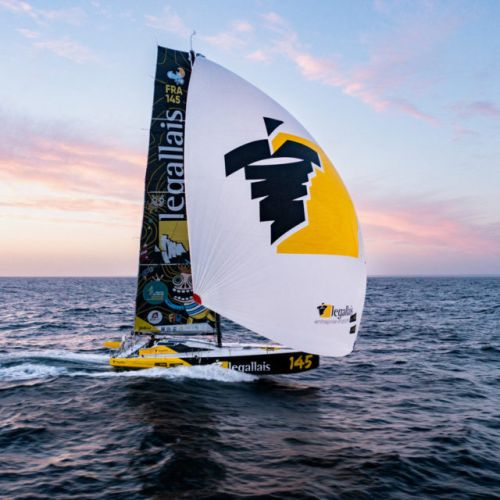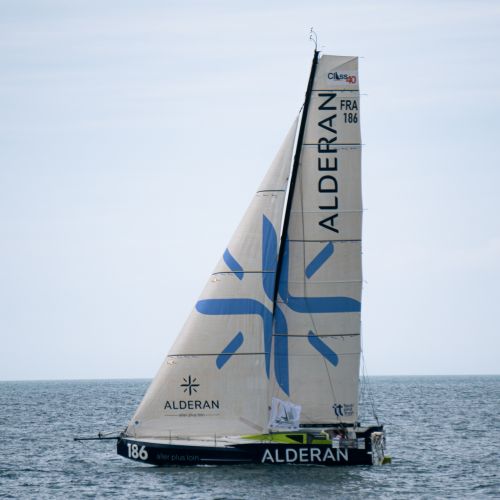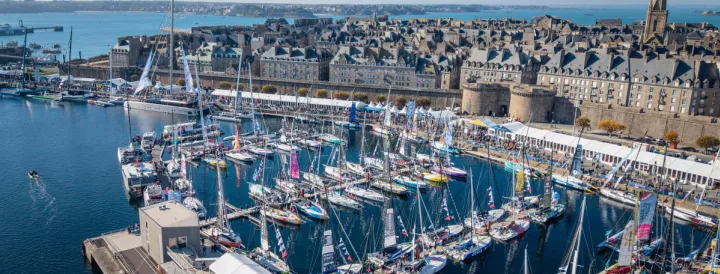
Bye bye Saint-Malo, see you in Pointe-à-Pitre!
 AFP
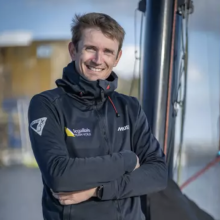
Not many share Corentin Douguet's experience (SNSM Faites un don !) of 'really enjoying 7 hours of uninterrupted sleep in a comfortable bed.' On the pontoons, whether first-timers or seasoned offshore racing veterans, most admitted to waking up before the alarm. 'A matter of stress' for Sasha Lanièce (Alderan), a question of 'noise on the causeway' for David Sineau (Ekinox Réthorès), and also a matter of what's at stake for Fabien Delahaye (Legallais): 'It's the culmination of a 4-year cycle focused on the Route du Rhum. You put pressure on yourself because you don't want to blow it—it's THE major race, the one every sailor dreams of.
All of them, however, are aware of how fortunate they are to set off in unexpectedly good conditions, like Loïc Féquet (Funae), who returns this year at the helm of an older-generation Class40, a "pointu" (sharp-sterned boat): "In 2018, when I had to deal with three low-pressure systems in a row, it was far more difficult than setting off in these beautiful conditions. We should reach the Azores fairly quickly, and even if we catch some wind there, it will be in milder temperatures—it's really pleasant to look forward to this scenario," said the sailor from Saint-Malo as he put on his foul-weather bib trousers. "It's a rather unusual Route du Rhum where we sail downwind at the start and upwind at the end," confirms Corentin Douguet. "That's the nature of a race with a fixed departure date. It's not a record attempt!"
Stepping into the unknown
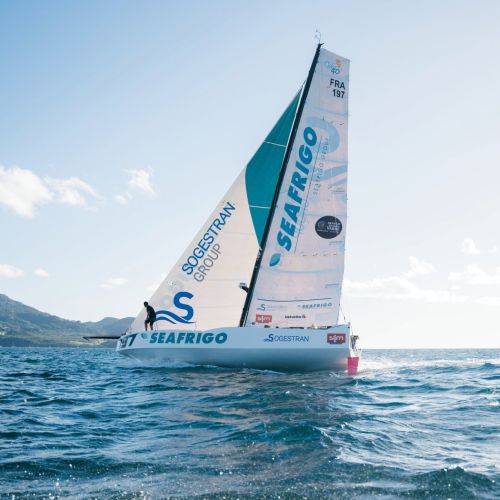
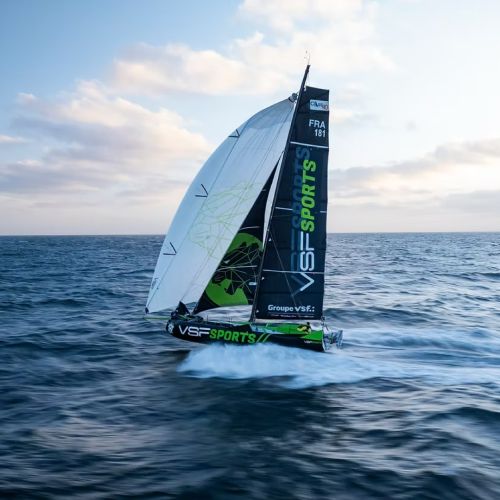
Unlike the giant multihulls and even the IMOCAs, the unique aspect of a Class40 transatlantic race is the inability to script the entire race, which could last between 12 and 14 days. "I'm not thinking about the finish, but rather about doing things right every day with as few errors as possible," says Pep Costa (VSF Sports). "After that, routes will open up, and we'll have to be opportunistic, but I'm not projecting too far ahead." Is the highly uncertain scenario for the second week after the Azores more uncomfortable for the favorites who have the most to lose? "The challenge is being among the leaders who pave the way and fall into the traps. But I still prefer being in this position than the opposite," replies Guillaume Pirouelle with a wink aboard Sogestran SeaFrigo, winner of the Transat Café l'Or and the man to beat in 2026.
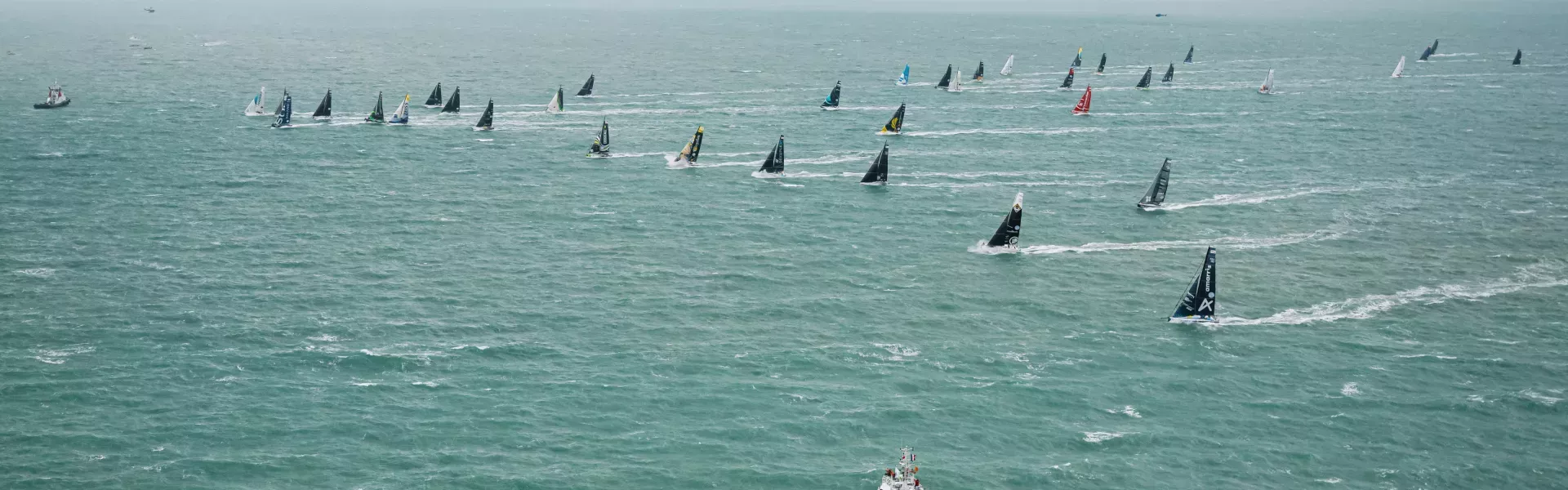
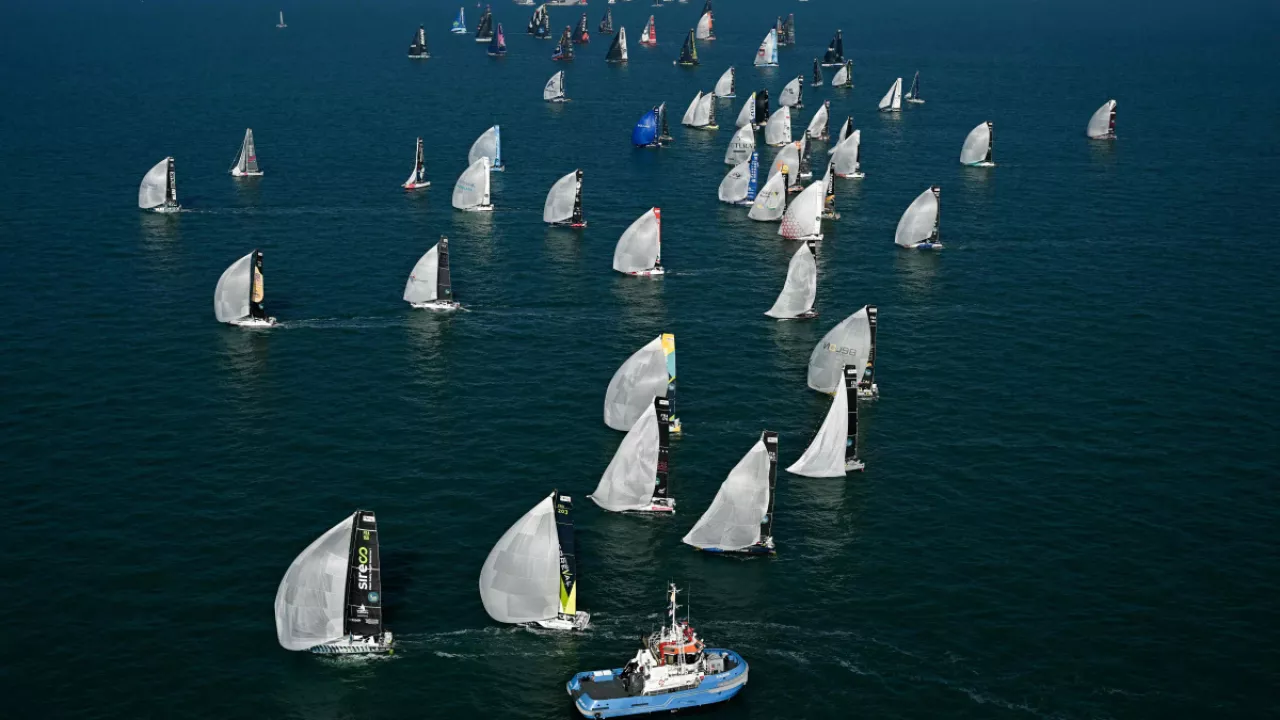
It is a breathtaking backdrop, a real windfall for this time of year. Forgotten are the departures under low skies, rough seas, and harsh conditions. This Sunday, the weather offered the finest backdrop: blue skies, a high sun, and a medium north-easterly wind of 8 to 11 knots. Ideal conditions to "get into" the race, though that did not stop the skippers from maintaining extreme concentration to avoid collisions and pull off a successful start. The crew members left the boats four minutes before the gun.
At 1:02 p.m., the skippers, finally alone, crossed the 3.2-nautical-mile (5.9 km) starting line. It was a hitch-free start, except for three skippers penalized for crossing the line too early: Christophe Rateau (Gustave Roussy) and Marco Guerra (Imagin’Act-Socomec) in Class40, and David Ducosson (Trilogik) in Vintage Multi.
For the skippers, the first task is to reach Cape Fréhel, a mandatory waypoint located 16 nautical miles (29 km) away.
Rounding order at Fréhel:
Quentin Le Nabour (Bleu Blanc Planète Location)
Guillaume Pirouelle (Sogestran Seafrigo)
Mikael Mergui (Hirsch Centrakor)
Alexis Thomas (AfterData Elcia)
Guillaume L'Hostis (Alternative Sailing Constructions du Belon)