Four winners, one Rhum: their perspectives on the Class40
 Arnaud Pilpré
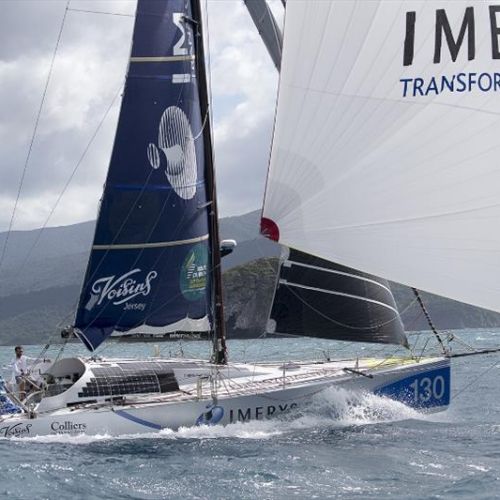
They know the Route du Rhum like the back of their hand. They have all won it, each in their own time, each with their own boat and their own story. Phil Sharp, the first Class40 winner in 2006, Thomas Ruyant, winner in 2010, Alex Pella, victorious in 2014, and Yoann Richomme, two-time defending champion following his victories in 2018 and 2022, form a very exclusive club: that of the four Route du Rhum winners in Class40.
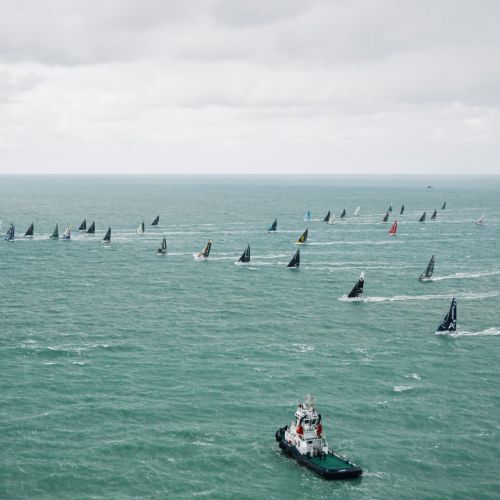
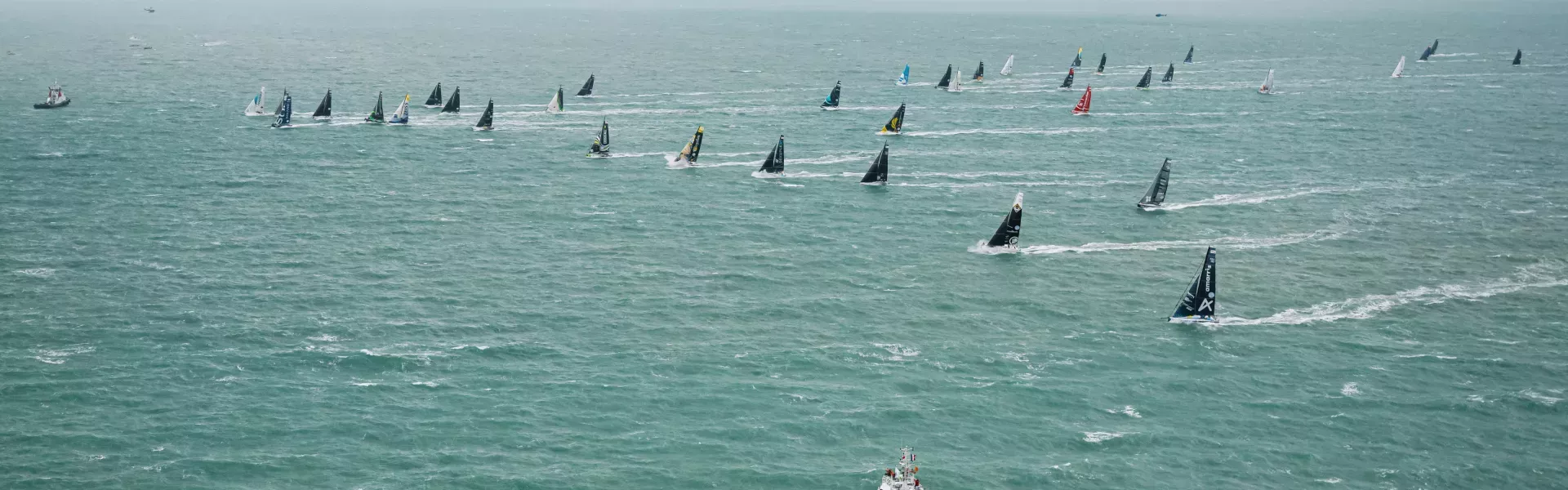
They have all retained a special bond with the Class that accompanied them for part of their career. With just a few days to go before the start of the twelfth edition, they are all keeping a close eye on this fleet they know so well. For over the past twenty years, the boats have evolved significantly, the level of competition has intensified and performance has soared. But the essence of the event seems to have remained unchanged: an international fleet, sailors from diverse backgrounds, and the ability to deliver, through the Rhum, one of the most fiercely contested ocean regattas.
A fleet that promises another great battle
Whilst the four men agree on the spectacular evolution of the boats, they also share another view: the level of the 2026 line-up promises a particularly open race.
Yoann Richomme sees “four or five boats in contention for victory and around ten boats for the podium”. Among the men to follow , he singles out Guillaume Pirouelle, Alexis Loison and Corentin Douguet.
“Guillaume Pirouelle strikes me as the one who handles his boat best and has best developed it. He’s solid, extremely well-trained and a very complete athlete; he’s the sort of person capable of winning major events. […] As far as I’m concerned, Guillaume, Corentin and Alexis are the three favourites. That said, there are always one or two others who might disrupt this head-to-head battle. There are often surprises, with people exceeding expectations or their level in these events.”
Thomas Ruyant shares this view of an extremely competitive fleet: “The former Figaro sailors – Pirouelle, Loison and Delahaye – are bound to be serious contenders in this race. Guys like Axel Trehin can also make a difference as they’re very much at home on the open sea. Robin Follin also performed well in last year’s Transat Café L’Or and is having a fine season.”
Phil Sharp, for his part, prefers not to venture into making predictions: “I don’t really have a favourite, but I know that nothing will be decided until the final day.”
 Arnaud Pilpré
Winning the Route du Rhum: persevere, decide, endure
So, what makes a Route du Rhum winner? The answers from the four former winners differ, but they all agree on one point: over nearly 3,500 miles, speed alone is not enough. You have to see it through.
For Yoann Richomme, the most important quality will be endurance.
“Up front, the pace is going to be incredibly fast. The last race was like that, which often leads to the boats being pushed to their limits. The most important thing will be to avoiding any breakdowns whatsoever whilst maintaining a high pace. It’s no easy feat! It requires a lot of thinking, determination and endurance; you have to be very strong! ”
His experience from the last editions also makes him dread the long spells of bad weather in the North Atlantic: “A week in a storm, upwind, on boats like these, is incredibly gruelling. In a way, you have to be the last one to crack.”
Thomas Ruyant emphasises the commitment required from the very first few miles: “You can’t hold back on energy or commitment. You’ve got to step on the gas straight away; falling behind at the start can quickly prove costly – something Yoann might well disagree with,’ smiles the northern sailor. ‘Given the level, the sailors’ profiles and the commitment today’s boats demand, it’ll take a huge outlay of energy to finish ahead of the others – that’s for sure!’
Alex Pella brings another dimension to the table: that of composure. “To win a race like this, people always say: a good boat, well prepared, and a great team. For me, you need to be very composed – not overconfident, but composed about yourself and your abilities. That’s what gives you the confidence when you have to make decisive strategic choices.”
Take risks, yes, but at the right moment: “The guy who’s going to win is the one who’s done it at the right moment. […] It’s a gut feeling – what I’d call ‘momentum’! ”
Phil Sharp, for his part, focuses on the weather and preparation: “You always have to think ahead about a weather system so you’re in the right place for the next one coming through. You need to be well prepared and, above all, avoid taking on water.”
And with a smile, he recalls another lesson he learnt from his own Rhum race: “I meant to say it’s better to keep all your sails, but I managed to win the Rhum without a gennaker. But yes, the spinnaker is more important than the gennaker!”
 Laurent Vidal
Memories that never fade
Behind the competitor’s advice lie, above all, four very different stories. Four Route du Rhum races that left their mark on their careers and whose memories remain, sometimes fifteen or twenty years later, surprisingly vivid.
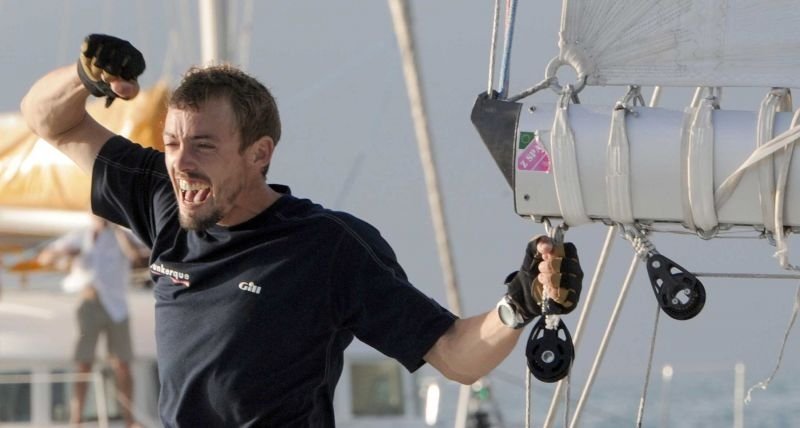
The Class40 victory will remain one of his first major triumphs in an ocean race: “I have wonderful memories of that season, sailing mainly as part of a crew – I really enjoyed it. The Route du Rhum, a victory with my partners, were my very first wins in major races, so naturally those finishes really left their mark.”
He particularly remembers the arrival in Guadeloupe, under a sky filled with squalls and beautiful light, but also the battle he fought against Nico Troussel, Sam Manuard, Bernard Stamm and Yvan Noblet.
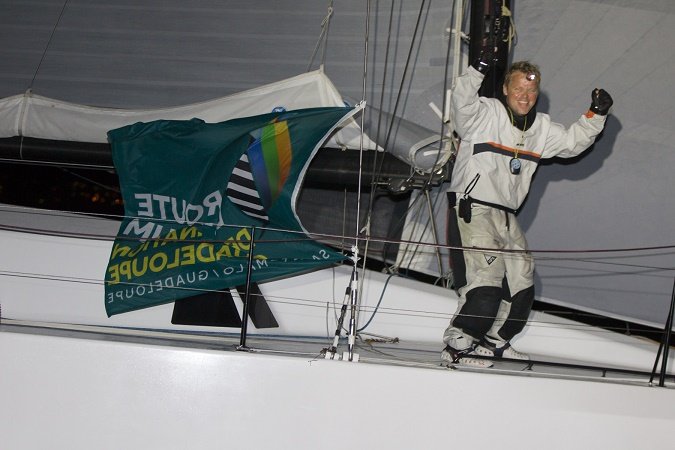
Alex Pella, for his part, appreciates how fortunate he is to belong to this very exclusive club of winners: “I’m already very proud to be part of this small ‘club’ of Route du Rhum winners, especially when you look at the line-up: the sailors who have won the Route du Rhum are extraordinary guys with an incredible level.”
 Alexis Courcoux
Yoann Richomme: two Route du Rhum, two different scenarios
Yoann Richomme occupies a special place in this story: he is the only one of the four former winners to have won the Route du Rhum twice, in 2018 and then in 2022.
Two victories, but two radically different scenarios. In 2018, on his first attempt, he quickly took the lead aboard Veedol-AIC and won in 16 days, 3 hours and 22 minutes.
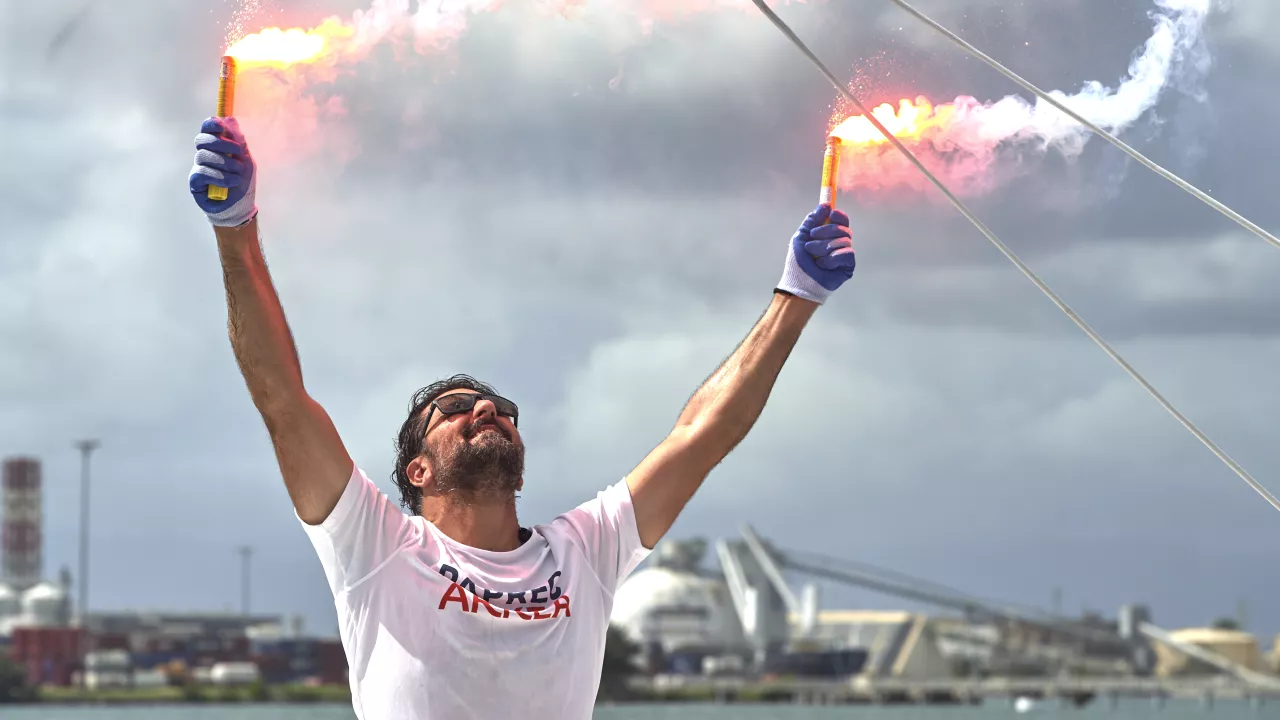
Four years later, the situation was quite different. On board Paprec-Arkéa, Richomme was handed a four-hour penalty for a false start and set off from Saint-Malo in last place. He then began a spectacular comeback, gradually regaining the lead of the fleet and winning in Pointe-à-Pitre after 14 days, 3 hours, 8 minutes and 40 seconds, beating his own 2018 record by more than two days.
Two editions, two ways to win: mastery in 2018, comeback in 2022. But one constant remains: the ability to keep going right to the end.
Phil Sharp: from first victory to ‘war machine’
Twenty years ago, Phil Sharp wrote the first chapter of this story. As the first Class40 winner of the Route du Rhum in 2006, his memories of that pioneering edition also illustrate just how much the Class has changed.
His first Class40 Rhum remains an extraordinary race, contested on brand-new boats, with no real benchmark to go by and with sailors from very different backgrounds. Even before the start, he had encountered numerous problems with his boat and suffered several breakdowns during his qualifying campaign.
The start hadn’t gone any better: “In terms of experience, I’d messed up the start, rounding the Cap Fréhel mark in last place. Little by little, I caught up with the fleet. Gildas Morvan, Dominique Vittet and I all found ourselves pushing these new boats really hard.”
Then the storm hit. A faulty autopilot, the stern of the boat filling with water, the electronics and autopilots submerged: “I thought my race was over, but luckily my autopilot survived.”
Sharp nevertheless managed to get back into the race, pulled away to the north and took the lead. Until the Atlantic reminded him that nothing can ever be taken for granted.
“I was hit really hard by a storm; the night was pitch black. There was a black wall in the night with 65-knot winds; I was under gennaker and with the mainsail up. I obviously lost my gennaker, which was torn to shreds, and I suffered quite a bit of damage to the boat.”
What followed was almost surreal. Exhausted after a stormy night, he overslept his alarm and slept for eight hours straight, with the boat on autopilot and under spinnaker. When he woke up, however, his boat had gained another mile on Gildas Morvan.
“Over the last two days, I ‘just’ had to avoid making any mistakes, but I was completely knackered by the finish. After such a gruelling solo race, winning it felt like a dream. It’s given me a huge boost of motivation to carry on racing offshore and take my career to the next level.”
Twenty years after the Class40’s first victory in the Route du Rhum, Phil Sharp’s recollections ultimately convey the essence of it all: the boats have changed, performance levels have skyrocketed, and so have the sailors’ profiles. But the Rhum remains an adventure in which you have to be able to push your limits without losing sight of the race itself.
And this year once again, these four former winners will be in the front row to watch closely as the story unfolds.
 AFP